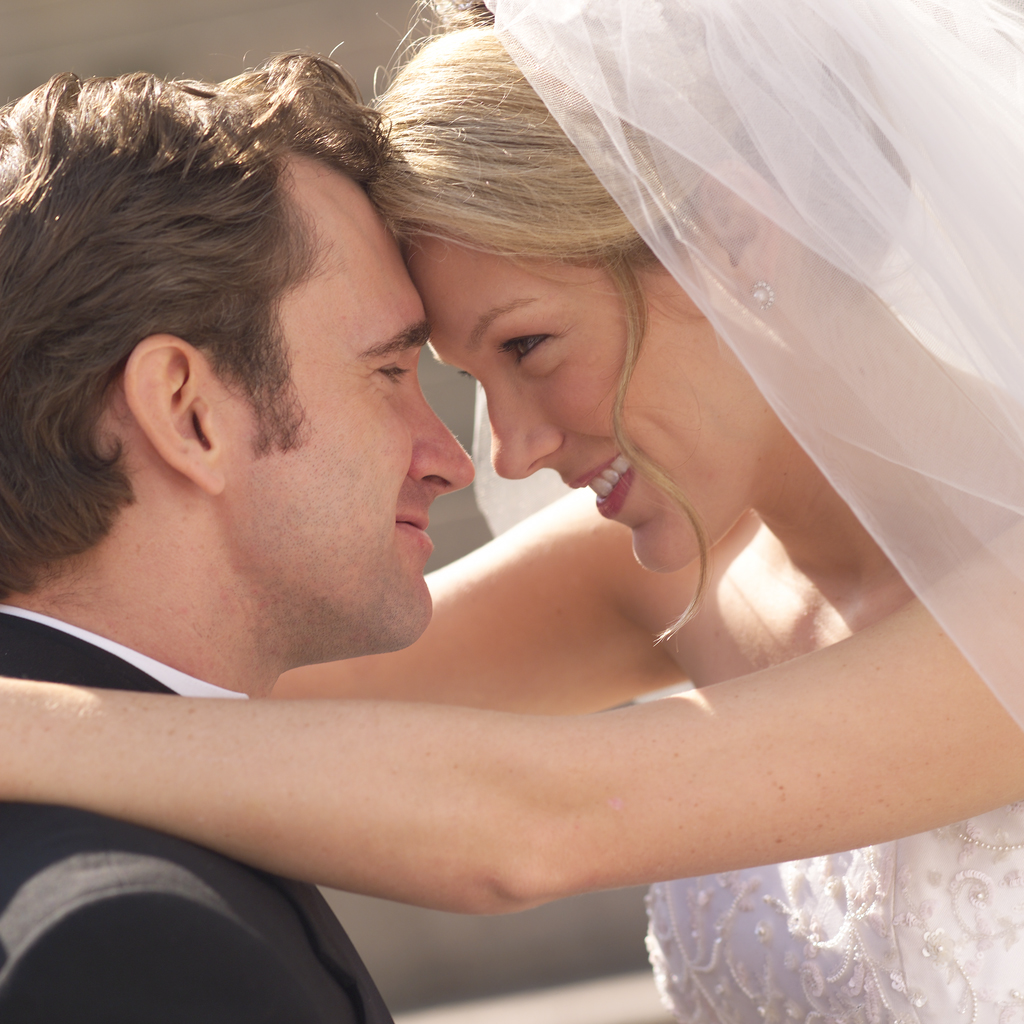
 Bell discredits representation (and therefore photography) as true art. Due to its basis in our physical world, it is distracting from the aesthetic emotion experienced through significant form. Though I acknowledge that simply snapping a picture of whatever one sees fit should not constitute as true art, I believe that some photography can definitely have artistic value. Take, for example, a wedding photo. If captured correctly, a very emotional moment can be frozen in time and relived for years to come. One can't argue that love is one of the most intense and "other worldly" human emotion-arguably beyond normal emotions and therefore possibly sublime or a form of aesthetic emotion. Of the thinkers we have studied so far, a common theme of emotion as an integral requisite for art has emerged. If representation can trigger recollection of such a strong emotion, I believe that it definitely has artistic value.
Saturday, February 26, 2011
Representation
Bell discredits representation (and therefore photography) as true art. Due to its basis in our physical world, it is distracting from the aesthetic emotion experienced through significant form. Though I acknowledge that simply snapping a picture of whatever one sees fit should not constitute as true art, I believe that some photography can definitely have artistic value. Take, for example, a wedding photo. If captured correctly, a very emotional moment can be frozen in time and relived for years to come. One can't argue that love is one of the most intense and "other worldly" human emotion-arguably beyond normal emotions and therefore possibly sublime or a form of aesthetic emotion. Of the thinkers we have studied so far, a common theme of emotion as an integral requisite for art has emerged. If representation can trigger recollection of such a strong emotion, I believe that it definitely has artistic value.

Thursday, February 24, 2011
The Value of Formalism (Response to Sarah)
In Sara's most recent post she writes, "Formalism happens no matter what intention the artist has, hence why it is really the only fair way to judge art first and foremost." I do have to agree wholeheartedly that formalism is perhaps the most direct and objective way of defining art. If we define how lines, colors, and shapes should exist in great art, then determining whether or not something is art would be simple. I must argue, however, that despite Bell's aesthetic emotion strict formalism seems somewhat lacking in the feeling, diversity and creativity that art is so often associated with. How can art be unique if it is independent of content?
Christopher Lotito's addresses this concern and confirms my critique when he writes, "Neither Formalism nor Neo-Formalism is the defining answer to the questions raised in the nature of art. As before, we are left to wonder, what theories will be created and indeed shot down by the philosophy community in relation to the nature of art next?"
A link to Lotito's Essay
Christopher Lotito's addresses this concern and confirms my critique when he writes, "Neither Formalism nor Neo-Formalism is the defining answer to the questions raised in the nature of art. As before, we are left to wonder, what theories will be created and indeed shot down by the philosophy community in relation to the nature of art next?"
A link to Lotito's Essay
Emotion Beyond Our Control (Bell, Significant Form, & Aesthetic Emotion)
Significant form, according to Bell, is common to all art in its formalism. It is not the intention of the artist or the thoughts of the viewer which give art its unique value, but rather the aesthetic emotion which is evoked through the shape, color, and contour of the work. Further defending art’s unique value, Bell distinguished art from normal human experience when he wrote, “Great art remains stable and unobscure because the feelings that it awakens are independent of time and place, because its kingdom is not of this world.” These feelings are art's aesthetic emotion. The problem with aesthetic emotion is that it has yet to be defined. In his attempt at elaborating upon this mysterious feeling, Bell does not expand beyond the circular definition that significant form elicits aesthetic emotion which is the emotion felt from viewing significant form. The two terms are used dependent upon one another, creating a requirement for great art, but not defining characteristics which can exist outside of art.

In considering the power of aesthetic emotion derived from significant form, Bell states that, "The great value of art lies in its ability to shake us out of our everyday lives, to connect us with a deeper reality." My question is, who has access to this deeper reality? Is it the artist's job to create art which captures and intrigues its viewers and therefore forces aesthetic emotion upon them? Or is it the responsibility of the viewer to recognize significant form in order to obtain aesthetic emotion? Bell would argue that the only way to recognize art--and therefore significant form and aesthetic emotion--is to feel it. But how can we recognize an emotion if we have not previously experienced it? Is Bell suggesting that truly great art has a power over us? If it transports us beyond our everyday experiences and emotions, do we have a choice in how we respond to it?
Thursday, February 17, 2011
Childlike Bliss
 "One might compare the relation of the ego to the idwith that between a rider and his horse. The horse provides the locomotor energy, and the rider has the prerogative of determining the goal and of guiding the movements of his powerful mount towards it. But all too often in the relations between the ego and the id we find a picture of the less ideal situation in which the rider is obliged to guide his horse in the direction in which it itself wants to go."- Freud
From New Introductory Lectures on Psychoanalysis, 1932.
A debate arose in class on Wednesday about the term "childlike". Sean mentioned that just because a behavior, thought, or piece of art is "childlike" doesn´t necessarily make it bad or regressive. And for that matter, regression doesn´t necessarily have to be bad too. If art takes us back to a state of play in childhood and helps us resolve current issues, I would consider it a good thing. The id is instinctual. It is uninhibited. It contains raw emotion without censorship or repression. The id is perhaps the most honest and pure part of the self; the closest to reality without being clouded by the expectations of the superego and the pride of the ego. Some theorists (including Plato) argue that from birth, we are corrupted by the outside world and that a return to our original selves would be ideal/a path to true happiness. Could this include a return to the purity of the life of the solitary id? With just the id (as in childhood), there are no repercussions, no guilt, no inhibitions, no obligations; just ignorant bliss. Would art ( such as the literature described by Freud) then be a tool and a mean of obtaining this state of mind, purity, and ultimately happiness? Am I reading too far into this? What do YOU think?
Reading into Freud
 "The ego is not master in its own house."-Sigmund Freud
Freud´s Theory of the Unconscious suggests that we all have repressed and unresolved childhood conflicts below the surface of our conscious mind. These conflicts, he suggests, stem from a battle between the id (instinctual desires) and the superego (“conscience,” namely, socially-acquired control mechanisms which have been internalized, and which are usually imparted in the first instance by the parents"), forming the ego. The ego is accessible in the preconscious while the superego and the id are not. However, these three parts of the mind make up the self and can explain how our minds work and therefore how and why we behave the way we do. How then, does art come into play? Freud addresses the writer as somewhat of a speaker for us all. Literature, he says, is a form of catharsis for the writer in that it represents childhood play and memories. For the reader, literature is device in which "we can enjoy our own day-dreams without reproach or shame". Consistent with Freud´s outlook on gender differences, a female can enjoy erotic literature and a male can enjoy aggressive literature, behaviors which are stereotyped and disapproved by society, without feeling guilty and without affecting the outside world. Are we conscious of this catharsis? Does reading bring us into a different world? A world which our id desires to live in but is denied by the superego. In this manner, Freudian psychology helps explain why we create art (in the form of literature), but does it account for a definition of what art actually IS? Is that too something beyond our grasp and hidden in the unconscious?
Friday, February 11, 2011
Response to Gina
In her blog, Gina asked: So is all advertising bad in its manipulation? Are their any campaigns whose consumer control is actually a valuable employment of artistic communication? In my opinion, advertisement extends beyond art. Yes, maybe an add/campaign does influence the consumer and convey the emotions intended by marketing companies; but the intentions behind these adds do not stop with conveying a feeling. The motive for making consumers feel is to persuade them into buying a specific product and therefore financially benefits the company. Despite the emotional messages that may be portrayed, is the consumer actually learning anything? Does the consumer become a better person from feeling these emotions or buying this product? Perhaps, but if so, this process is definitely not directly due to the campaign; it is indirectly linked-- in a subjective manner-- to the emotions marketers attempt to control. So are there campaigns with artistic value of communication? I would have to say no. The emotion isn´t raw; it isn´t conveyed with moral intentions. The communication between companies and consumers is not indicative of sharing human experience; it is rooted in the fiscal. Perhaps some advertisements appear artistic, but I find it difficult to argue that their communicative qualities are solely to inspire or benefit the consumer without also financially--and therefore, selfishly and pleasurably--benefiting the creator.
Thursday, February 10, 2011
The Value of Communication
Genuine poetry can communicate before it is understood. -T.S. Eliot
Although I agree with our discussions in class in that Tolstoy´s definition of art and its all too exclusive opportunity for artistic failure, I do wonder about the value of communication. We touched upon the difference between expression and representation on Wednesday, and it triggered a thought. Expression comes from the artist. It is the actual act of creating and releasing an emotion; a form, perhaps, of catharsis. Representation, however, is more about the interpretation of the observer. So yes, it seems virtually impossible for the observer to experience the exact same emotion as the artist because the two are experiencing it through a different medium/method. What I am interested in is the unique value of communication (of emotions) and why Tolstoy places so much emphasis on it in his definition of art, regardless of whether or not his theory is impossibly and radically based on unattainable success and perfection.
 Author AGE Blake presents the above image as a guide to "Structural Communication". Upon analyzing the circle, I concluded that communication both starts and ends with the individual. First, an intention (a thought, as Plato might say) is triggered in one´s mind and emotion is experienced. Next, the individual (as an artist) creates a piece of art as a visual presentation--a representation of his emotions. Then, response from viewers occurs, followed by questions, diagnostics, and discussion with others. Finally, however, we return to the individual and "viewpoints" are formed by the observer about the artist´s original intent. Accordingly, communication, however interactive, does always lead back to the individual. What Tolstoy was getting at, I believe, was the value in communication as a means to experience something outside of oneself. I do believe that communication can and does make a person better. Although we cannot ever experience the exact same emotion or thoughts as another person, coming extremely close can suffice in triggering feelings (and therefore thoughts) that we might not otherwise have encountered.
Although I agree with our discussions in class in that Tolstoy´s definition of art and its all too exclusive opportunity for artistic failure, I do wonder about the value of communication. We touched upon the difference between expression and representation on Wednesday, and it triggered a thought. Expression comes from the artist. It is the actual act of creating and releasing an emotion; a form, perhaps, of catharsis. Representation, however, is more about the interpretation of the observer. So yes, it seems virtually impossible for the observer to experience the exact same emotion as the artist because the two are experiencing it through a different medium/method. What I am interested in is the unique value of communication (of emotions) and why Tolstoy places so much emphasis on it in his definition of art, regardless of whether or not his theory is impossibly and radically based on unattainable success and perfection.
 Author AGE Blake presents the above image as a guide to "Structural Communication". Upon analyzing the circle, I concluded that communication both starts and ends with the individual. First, an intention (a thought, as Plato might say) is triggered in one´s mind and emotion is experienced. Next, the individual (as an artist) creates a piece of art as a visual presentation--a representation of his emotions. Then, response from viewers occurs, followed by questions, diagnostics, and discussion with others. Finally, however, we return to the individual and "viewpoints" are formed by the observer about the artist´s original intent. Accordingly, communication, however interactive, does always lead back to the individual. What Tolstoy was getting at, I believe, was the value in communication as a means to experience something outside of oneself. I do believe that communication can and does make a person better. Although we cannot ever experience the exact same emotion or thoughts as another person, coming extremely close can suffice in triggering feelings (and therefore thoughts) that we might not otherwise have encountered.
Monday, February 7, 2011
An Objective Definition of Art
 Reality is only a Rorschach ink-blot, you know.-Alan Watts
Today in class, we identified a problem in Tolstoy´s claim that in order for an artist to succeed, his work must communicate a specific emotion. That problem was that artist failure is all too possible, and furthermore, probable, if the observer does not understand the intent of the artist. While I understand the dilemma and limitations within this requisite, I can see why Tolstoy imposed such a claim in his theory. As we know, Tolstoy views beauty and pleasure as qualities of, but not the definition of, art. Beauty and pleasure are exclusively subjective. The error in supposing that the aim or art is to create beauty or experience pleasure, argues Tolstoy, is that we consider pleasure good because it is pleasure and beauty good because it is beautiful. Nevertheless, we have yet to define either beauty or pleasure objectively. Therefore, what many people often consider a definition of art is actually a subjective interpretation and justification for overly inclusive categorization of certain creations. Perhaps Tolstoy´s reason for such a claim is to eliminate subjectivity as much as possible. After all, isn´t the purpose of finding the qualities and requirements of art to eventually arrive at an objective and common definition that we can all agree upon? This would not be possible if everything was left open to interpretation.
Secondly, Tolstoy asserts that art can make a man better morally and socially. If a piece of art expresses a SPECIFIC emotion and its observer in turn feels what the artist did, then the artist has been successful in opening the observer up to a world of feelings beyond himself-- an objective world of common human experience despite an individual past.
Consider the common Rorschach ink blot. In psychiatry, it is often theorized that individuals in a negative mindset will interpret an ink blot as something negative, such as fire, while those in an optomisitc state of mind will see something positive, such as a butterfly. Is there only one way too look at (listen to, perform, or absorb) an a singular art form? Must art be objective or subjective? If not either extreme, how could we find the right balance of the two?
Saturday, February 5, 2011
Music- Thinking & Feeling

If music be the food of love, play on. -William Shakespeare
Most of us acknowledge that music can express an emotion but it wasn’t until recently that it was scientifically proven that music can actually affect our brains. According to Chordpiano.com, “Quoted in a 2001 article in USA Today, Suzanne Hasner, chairwoman of the music therapy department at Berklee College of Music in Boston, says even those with dementia or head injuries retain musical ability.” How’s that for a universal language? Music is processed in the amygdala which is the part of the brain that controls emotions and memory. Suzanna Hanzer explains that this is why we connect certain songs to childhood (or any other past) experiences such as our first kiss, first slow dance, or summertime in Maine. The American Music Therapy Organization claims music therapy may allow for "emotional intimacy with families and caregivers, relaxation for the entire family, and meaningful time spent together in a positive, creative way" yet they cannot pinpoint why yet.
For centuries, music has played a significant role in cultures, individual lives and memories, and the universe as a whole. Even William Shakespeare acknowledged its importance and mystery in his play Twelfth Night. Aldous Huxley defined music as expressing the inexpressible after a silence. Louis Armstrong was quoted referring to jazz, “Man, if you gotta, ask, you’ll never know.” George Santayana declared that “Music is essentially useless, as life is.” Perhaps music is mystery. So far, no one has been able to explain why we connect so emotionally to it. Because of this inexplicable capability to trigger emotions, memories, and feelings, one could confidently classify music as art. However, because Plato believed that music was in its true form and expressed directly in our world as such, music is also philosophy. With this argument, I completely agree with Plato´s statement that "Music is the highest philosophy", and is therefore an exception to the dichotomy of art versus philosophy.
Wednesday, February 2, 2011
Food for Thought (Response to Andrea)
 “Noncooks think it's silly to invest two hours' work in two minutes' enjoyment; but if cooking is evanescent, so is the ballet.”- Julia Child
Andrea posed the question, Is cooking an art? She suggested that the final product rather than the process of cooking is what may be considered art. Speaking from personal experience, I have a friend in culinary school in France and from the stories I´ve heard her tell, I gained a new appreciation for the science of food. One must know precise measurements, the way in which an ingredient will be manipulated through heating, freezing, boiling, or mixing, the orders of application or layers of ingredients which will satisfy taste buds the most, temperature, density, storage techniques, color combinations, and presentation styles. If we take into account our class requisite of art as something that requires skill, food and its preparation can, in my opinion, definitely be considered art. Culinary technique is taught. It is a science. Presentation and care can be put into preparing a dish or a meal. Furthermore, the sight, taste, and overall feeling of fullness after consuming a meal could be thought of as a moving/emotional experience-- another requirement of art that we discussed in class. Surely boiling water or microwaving a pizza isn´t art, but I do think that some culinary processes and creations could justifiably fall under the art category.
Poesis

"[Art] is there to celebrate the deeds of great heroes and divinities or as a manifestation of the excellence of the owner of the art (like Menelaus) or to foster enjoyment among those who contemplate it. There is no sense in Homer that poesis is something that needs defining or critical evaluation. What makes a work of art good is self-evident--it moves those who are exposed to it to admiration." -Ian Johnston, Poesis in Plato´s Republic
In describing Homer´s view of art, Johnston provides the antithesis-- Plato´s outlook on poesis "(meaning making) to refer to all common forms of artistic creativity in the visual and plastic arts, music, drama, poetry, and prose fiction"-- and elaborates on why art and philosophy cannot mix. While Plato seeks to define the perfect society, he points to philosophy and its logic as the only way to uncover the innate knowledge that exists our souls. The senses, Plato argues, are unreliable. They corrupt our souls from birth and cloud our vision of and access to the truth. Senses also trigger emotions. According to Plato, emotions are dangerous and hindering to a rational--and therefore knowledgeable-- society. With this information, it is easy to see why Plato considered art to be corruptive and dangerous. He did not deny the existence of art, but because of its irrationality, he saw no fit place for it among scholars and philosophers (the elite group of people that he believed were the only ones capable of discovering a universal truth). The aim of our seminar is to philosophize about art. It seems, however, that Plato considers the two to be opposites and therefore impossible to combine. An "imitation of an imitation", Plato argues, is too far removed from the truth to be considered relevant to society. How could one grasp the truth, however, if it wasn´t for art? Don´t we need a visual trigger to "remember" a true tree? I don´t understand how without these representations we can trace our thoughts back to the origin of a form. What do you think?
Subscribe to:
Comments (Atom)